If you run a business in India, your phone rings more than you think — and your business answers less than you believe.
You spend on Google Ads, Instagram, and WhatsApp to make that phone ring. Then a customer calls during lunch, during a rush, or at 9 PM — and the call rings out. They do not call back. They call the next business on the list. That is not a customer-service failure. That is the real cost of missed calls for a business in India, and it is one of the largest invisible leaks in the Indian economy.
This guide quantifies that leak with 2026 data: what a single missed call is worth, how calls leak across Indian industries, why response time decides who wins, and how to measure your own number in under ten minutes.
The Phone Is a Revenue Channel, Not an Afterthought
India is a voice-first market. In a 2026 study by Truecaller, Tata Tele Business Services, and Kantar — surveying 1,000 consumers and 500+ businesses across 17 Indian cities — 76% of consumers said they prefer a voice call from a business over email, SMS, or chat. Voice is the most trusted and most used business channel in the country, ahead of every digital alternative.
The catch: those same consumers are conditioned to ignore calls they do not recognise. 79% of businesses report that customers avoid answering calls from unrecognised numbers. Spam calls — more than 4,000 crore of them in 2025 alone, per Truecaller — have trained Indians to distrust a ringing phone.
The result is a paradox most owners feel but never measure:
Customers want to call you. Customers are afraid to answer you. And when they finally do call — at the exact moment of peak intent — you are not picking up.
In my agency days at Forwardkite, we ran digital marketing for Kerala brands — a jutti label, a snacks brand, a Kerala-style apparel store. Clean storefronts, disciplined ad budgets. Every one of them had the same blind spot: we'd drive the traffic, spend the budget, and then watch a customer land on the store, call to confirm an order, and hit a phone that answered 9-to-6. The storefront was modern. The phone was a leak.
That is the pattern across India. Web and ads create intent. The phone converts it. A missed call is not a phone problem — it is a funnel leak.
The Math: What One Missed Call Is Actually Worth
Most owners underestimate a missed call by 5–10× because they never run the arithmetic. Here is the formula every missed-call calculator uses:
Missed calls × % that are revenue-intent × conversion rate if answered × average customer value
Worked example — a typical Indian clinic:
| Input | Value |
|---|---|
| Calls per month | 1,000 |
| Missed call rate | 15% → 150 missed |
| Revenue-intent calls among missed | 60% → 90 |
| Would-be booking rate | 30% → 27 |
| Average patient value | ₹5,000 |
| Monthly leak | ₹1,35,000 |
| Annual leak | ₹16,20,000 |
The same math at Indian market rates (CallSphere, 2026):
| Vertical | Avg. lead value (₹) | Close rate | Expected revenue per missed call (₹) |
|---|---|---|---|
| Dental / diagnostics (Hyderabad) | ₹6,500 | 32% | ₹2,080 |
| Coaching / test-prep admission (Kota) | ₹42,000 | 18% | ₹7,560 |
| Real estate site visit (Pune) | ₹3,20,000 | 4% | ₹12,800 |
| D2C order / COD query (Jaipur) | ₹1,400 | 45% | ₹630 |
| Car service booking (Chennai) | ₹5,800 | 40% | ₹2,320 |
| Insurance / NBFC lead (Delhi NCR) | ₹9,000 | 12% | ₹1,080 |
A typical urban service business fields 40–120 inbound calls a week, and 25–40% of them arrive after hours or during peak congestion. At the lead values above, an unanswered phone runs into lakhs per month of leaked pipeline for even a mid-sized operation.
One honest caveat: not every missed call is a lost customer. Some callers are spam, existing customers, or people who reach you on callback. The figure above is revenue at risk — the realistic upside of answering — not guaranteed loss. That distinction matters, because it is exactly what makes the number defensible. (For a granular breakdown by lead value and close rate, read how much missed calls cost a business).
The 6 Ways Calls Leak Money
The leak is not one event. It is six, compounding silently across your week.
| Leak | What happens | Cost |
|---|---|---|
| Unanswered call | Caller rings out, books the competitor on Google/Practo | ₹400–₹800 consult lost |
| Hold too long | 41% of callers hang up after 1–2 minutes on hold | Consult lost |
| After-hours | 38% of missed calls happen between 7 PM and 11 PM | Full customer LTV lost |
| No confirmation / reminder | 20–32% industry no-show rate; capacity lost | Rescheduled slot = lost revenue |
| Slow follow-up | 5-minute response converts 3.7× better than 1-hour | Lead goes cold |
| No call capture | ~80% of callers never leave a voicemail; 85% never call back | Double loss — revenue + data |
Two numbers in that table deserve emphasis.
First, the after-hours gap. CallRail's 2025 dataset of 18 million SMB calls puts 40% of business calls outside standard hours — 25% in the evening, 8% late night, 7% weekends. In India, the skew is sharper: Engageo's 90-day study of 47 Indian clinics found 38% of missed calls happened between 7 PM and 11 PM — exactly when clinics close and working professionals do their health admin.
Second, what happens to the caller. Across 85 Indian SMBs studied over 30 days, 62% of inbound calls went unanswered. Of callers who reached no one, 85% never called back and ~62% called a competitor directly. Nearly 80%, per BrightLocal's 2025 consumer survey, refuse to leave a voicemail at all. They call the next number on the list — which is almost always a business within 5 km that paid the same ad cost you did.
The Hidden Cost: Staff Time and Ad Waste
The direct revenue loss is only half the story. Two more leaks sit underneath it.
Staff time spent on repetition
An estimated 90% of inbound calls are transactional — the same five questions repeated: "Doctor available?", "Timings?", "Fees?", "Admission open?", "Order status?". In a clinic, a coaching centre, or a D2C brand, that repetition eats 3–4 hours a day of a person paid ₹15,000–₹25,000 a month (metro receptionist rates, 2026) to do work a ₹5,000-a-month task should cover. The person is qualified for patient care, enrolment counselling, or closing — but they are on muscle-memory answers while walk-ins wait and calls ring out.
Ad spend that never converts
You pay ₹150–₹500 per lead across Google and Meta. You run ₹50,000–₹2,00,000 a month of ads. When the call generated by that spend rings out, the spend does not become revenue — it becomes a gift to the competitor who answers. As one clinic owner told Engageo: "I was spending ₹80,000 a month on Google Ads to drive more calls. Then I found out 4 out of every 10 calls were going to voicemail. I was paying to leak money faster."
This is a response-time problem, not an acquisition problem. You are generating demand. You are failing to capture it.
The 2026 Evidence: Why Response Time Decides Everything
In 2026 the data is unambiguous: the business that responds first, wins.
- 5-minute response → 3.7× more closed deals than a 1-hour response, across 527 Indian SMBs (HelloGrowthCRM, 2026).
- Within-one-hour contact → 7× more meaningful conversations than an hour later (Harvard Business Review).
- Phone leads convert at ~42% — 15–20× higher than web forms (Invoca, 70 million calls analyzed, 2026).
- 79% of consumers say they will switch to a competitor that responds faster (Invoca B2C Buyer Experience Report, 2026).
- Real estate is the most damning case: across 34,148 property enquiries at 14 Indian brokerages, only 42% ever reached a connected phone call — 58 of every 100 enquiries were never spoken to, and the median first-call time was 15.8 hours (ClosingFox, 2026).
Indian buyers already contact 3–5 vendors simultaneously. Speed of response is not a competitive advantage anymore — it is the entry ticket.
Industry-by-Industry: Where the Leak Bites Hardest
The cost of a missed call varies wildly by vertical, but the pattern is universal: the phone is the highest-intent channel, and every unanswered ring walks to a competitor's listing.
| Industry | Why calls are high-intent | Typical annual leak |
|---|---|---|
| Clinics & hospitals | Appointment-driven revenue; after-hours emergency | ₹2–4 lakh/month (Engageo) |
| Real estate | Site-visit enquiries worth lakhs per transaction | 58% of leads never connect (ClosingFox) |
| Coaching & schools | 60-day admission window concentrates a year of calls | Seats empty when phones ring out |
| Hotels & restaurants | Reservations, takeout, wedding/event bookings | Reserved revenue lost to the next listing |
| Gyms & fitness | Membership trials booked by phone | 40–60% of calls arrive outside staffed hours |
| D2C & e-commerce | COD confirmations, WISMO, pre-purchase questions | Cancelled CODs + lost orders (₹1.92L/yr at modest volume) |
Each vertical has a dedicated deep-dive in our Missed Calls series: Clinics, Real Estate (Phase 2), Schools & Coaching, Hotels (Phase 2), Gyms (Phase 2), and D2C & E-Commerce.
Why This Is Worse in India — and Worse in Kerala
Three structural reasons India loses more calls than Western markets:
- One person does everything. In most Indian businesses, the front desk handles phones, walk-ins, billing, and triage simultaneously. When a walk-in signs a form, the phone is ignored by necessity.
- Customers call outside business hours. Working professionals book appointments during their commute (8–9 PM) or on Sundays. The clinic closes at 7. The voicemail no one checks fills up.
- The competition is two taps away. Practo, Lybrate, Justdial, and Google Business all show 3–5 alternatives within 5 km. A ringing-out number is not a threat — it is default behaviour.
Kerala adds its own layer. 75% of Kerala small businesses now sell through WhatsApp Business, Instagram Shops, or Facebook Marketplace — the state has leapfrogged the website era. Customers message and call in Malayalam, and they expect a reply in Malayalam. Even the state's public healthcare system shows the gap: across 4.39 crore OPD visits in one year, only 0.87% were booked in advance online (Springer Discover Public Health, 2025) — Kerala patients overwhelmingly still book by phone, in real time, and move on fast when no one answers.
The Fix: AI Receptionists Changed the Economics
For 20 years the only options were: hire a full-time receptionist, or let calls go to voicemail. Both lost.
- A metro receptionist costs ₹25,000–₹45,000/month, covers one call at a time, and goes home at 7 PM — precisely when 38% of the misses happen.
- An answering service takes messages but cannot book, confirm, or close.
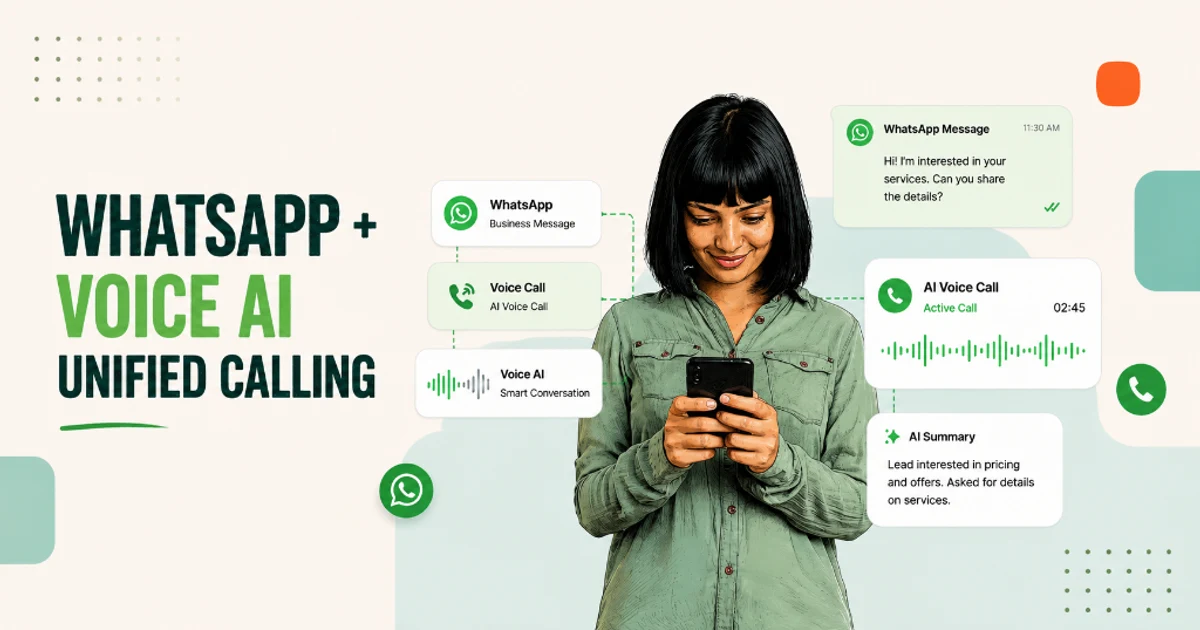
AI voice agents changed the equation. A production AI receptionist answers every call instantly — including the 9 PM, Sunday, and festival calls — in the customer's language, books into your calendar, and follows up. In India, where customers are trained to ring and ring the next number instantly if there's no reply, answering in under a second converts that impatience into a booked appointment instead of a lost lead.
How it works (the technical view): a voice agent is a real-time pipeline — speech-to-text, language understanding, text-to-speech — orchestrated to listen, decide, and respond within a second. Most "multilingual" platforms fail in India because they cannot handle code-switching (a single Malayalam sentence mixing English and Tamil, Hindi), regional accents, and interruptions. Our stack at Binate runs 0.9–1.5 seconds end-to-end, completes 96.6% of calls, and is trained on 10,000+ real Malayalam business conversations — native Malayalam plus English with code-switching. That is what "production-ready for India" actually requires, and it goes live in under an hour over a new published number, self-serve.
Anonymised real-world result: a diagnostic centre in Thrissur implemented an AI receptionist and cut missed calls by 80% within two weeks. Nothing else changed — same staff, same ads, same Google Business listing. The new published number was simply always answered.
The economics work because a recovered call is not a cold lead. Engageo's clinic data shows recovered missed calls convert at 28–34%, versus 6–9% for cold ad leads — a 3–4× conversion rate on calls that cost you nothing to generate.
How to Calculate Your Own Number (in 10 minutes)
You do not need a vendor's stat sheet. You need your own call log and five inputs.
- Pull your missed-call count. Check your phone/telephony log for last month: calls that rang out, hit busy, or went to a voicemail nobody checks.
- Estimate the revenue-intent share. Usually 30–50% of missed calls are genuine enquiries. Be conservative.
- Apply your close rate. What percentage of answered enquiries become a booking, order, or client? Use 20–40% as a starting range.
- Multiply by average customer value. Your first-consult fee, average order, or first-year customer value.
- Multiply by 26 working days (or by the month).
Missed calls/month × revenue-intent % × close rate × avg value = monthly leak
Use our Missed-Call Revenue Calculator — it does this arithmetic for you in 30 seconds, with per-vertical benchmarks baked in.
Frequently Asked Questions
What counts as a missed call?
Any inbound call that rings out, hits a busy signal, or lands in a voicemail nobody returns. If you want to be strict, exclude spam and wrong numbers — but most businesses discover their real miss rate is 25–40%, not the 5% they assumed.
Is every missed call a lost customer?
No. A share are spam, existing customers, or callers who reach you on callback. Treat the calculator output as revenue at risk — the realistic upside of answering every call — not a guaranteed loss.
How much does an AI receptionist cost?
In India, roughly ₹9,000–₹25,000/month depending on call volume — against a metro receptionist at ₹25,000–₹45,000/month who answers one call at a time and goes home at 7 PM. One recovered call a day typically pays for the entire monthly cost.
Does it work in Malayalam and other Indian languages?
Yes. A production system handles native Malayalam, English, and code-switching mid-sentence, with regional-accent tolerance. This is the difference between a real India-ready agent and a platform that "claims" multilingual support.
How fast can we deploy?
It's self-serve and simple. You sign up, get a new dedicated number that becomes your 24/7 AI receptionist, plug it into your website and Google Business Profile yourself, and it's live within the hour. No new hardware, no app for staff, no phone-system change. Your existing number can stay human-facing. Some businesses instead forward their existing number to the agent; that works only if your telecom provider allows call forwarding to VoIP numbers — a few providers restrict or block it. The new-number path works with every provider.
How do I prove ROI before committing?
Start with the calculator to size the leak, then run a two-week baseline: record inbound calls, tag each as answered / missed / transactional, and apply the formula. Your own numbers will tell you the payback period — for most Indian businesses it is under one month.
Recover the Conversations
Your leak estimate is ₹X/month. That is not an abstract figure — it is the revenue attached to calls your marketing already paid to generate.
Here is the part most businesses miss: you do not need to recover all of it. Recovering even 20% changes your quarter.
Start with the calculator, get your real number, and then see how an AI receptionist recovers the conversations your competitors are counting on.
Ready to automate your calls with Binate Voice AI?
Build your AI voice agent free in minutes. Connect your number, test live in Malayalam and English, and go live with zero lock-in.
Get Started Free →