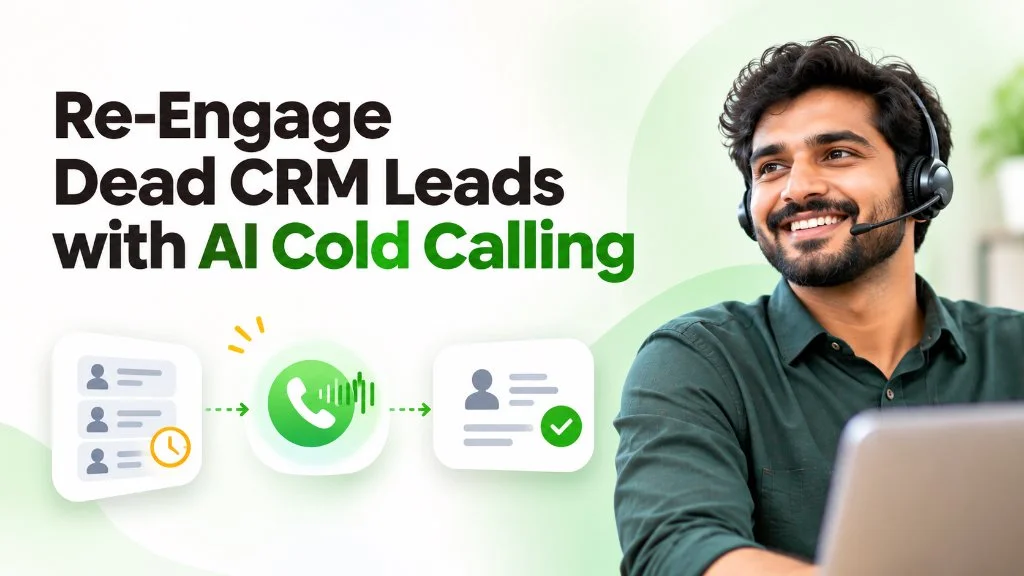
Every growing sales team sits on a hidden asset they have effectively written off: the dead lead graveyard.
Over the past 6 to 12 months, your business probably spent substantial money acquiring inbound leads through Meta Ads, Google search, trade shows, or portal listings. Some booked a demo. Many said "timing is bad, follow up in three months." Others vanished after receiving a quote.
Today, those thousands of contacts sit untouched in your CRM—whether that's Zoho CRM, LeadSquared, or HubSpot.
Why? Because human Sales Development Representatives (SDRs) hate dialing cold lists. Dialing 200 stale leads to connect with 8 people who might be interested is soul-crushing work with an 85%+ burnout rate.
This is where modern AI cold calling software has changed outbound sales economics.
Autonomous voice agents can systematically dial through dormant CRM segments, engage prospects in natural, sub-second conversations, qualify their current purchasing timeline, and either book a meeting or execute a live warm transfer to a human sales rep—all while remaining strictly compliant with telecom regulations.
Want to test outbound sales voice AI?
You can build, test, and listen to a live outbound sales qualification agent in English or Malayalam using the Binate Interactive Demo.
Robocalls vs. Conversational AI: Understanding the Critical Difference
Before deploying outbound voice automation, businesses must understand the massive distinction between illegal robocalling and modern conversational AI agents:
Traditional Robocall (Spam):
  [Prospect Picks Up] ──▶ 2-3 Seconds Dead Air ──▶ Pre-Recorded Audio Blasts:
                                                  "Press 1 for a cheap loan!"
                                                  ↳ Immediate Hangup & Spam Report (99%)

Conversational Voice AI (Permission-Based):
  [Prospect Picks Up] ──▶ Instant Sub-400ms Audio Turn:
                          "Hi Alex, this is Maya from Binate. I know it's been a few
                           months since you requested our pricing—are you still looking
                           to fix missed front-desk calls, or is that sorted out?"
                          ↳ Interactive, polite, pauses when prospect speaks (80%+ Listen Rate)
Traditional robocallers rely on automated blast dialers that play one-way recorded audio. They cannot listen, they cannot answer questions, and they violate telemarketing laws across every major jurisdiction.
Conversational AI outbound calls operate like an articulate, well-trained junior sales rep. The AI speaks with natural vocal inflection, listens attentively, handles common objections ("How much does it cost?", "Call me next week"), and respects prospect preferences instantly.
The Regulatory Framework: How to Avoid Carrier Spam Flags
The fastest way to destroy your outbound campaign is to have your business phone numbers tagged as "Spam Likely" or "Telemarketer" by telecom carriers like Jio, Airtel, Truecaller, AT&T, or Verizon.
To run high-converting, ethical outbound campaigns, top sales teams follow three non-negotiable compliance rules:
1. Maintain Telecom Registration (DLT / STIR/SHAKEN)
- In India: Outbound telecalling must comply with TRAI regulations. Businesses must register their sender headers and entities via the Distributed Ledger Technology (DLT) portal and restrict promotional calling strictly to 9:00 AM to 8:00 PM.
- In the US & Global Markets: Ensure outbound lines are authenticated via STIR/SHAKEN protocols and register your numbers with the Free Caller Registry to maintain pristine caller ID reputation.
2. Implement Instant Opt-Out Suppression
If a contact says "stop calling me", "not interested", or "remove me from your list", human reps often forget to check the suppression box in the CRM.
An AI voice agent utilizes natural language processing to detect negative intent immediately. When an opt-out is expressed, the agent politely concludes the call:
"Understood, Alex. I'll update our system so you don't receive further calls from us. Have a great day."
The system then fires an instant webhook updating your CRM's Do Not Call (DNC) field, permanently removing the contact from future dialing sequences.
3. Rotate Caller ID Pools Responsibly
Never blast 5,000 calls in a single day from a single phone number. Advanced outbound engines rotate calls across a verified pool of local virtual DIDs, keeping call velocity under 100 calls per number per day.
The 3-Step Cold Pipeline Re-Activation Blueprint
Here is the exact step-by-step workflow used by B2B service agencies, healthcare clinics, and real estate developers to revive dormant sales pipelines:
Step 1: Segment Your Dormant Database
Do not blast your entire CRM at once. Create targeted segments in Zoho CRM, LeadSquared, or HubSpot based on specific past behavior:
- Segment A (Lost Timing): Deals marked "Closed Lost - Budget / Timing" between 90 and 180 days ago.
- Segment B (Web Form Abandoners): Inbound inquiries that filled a quote form but never completed a discovery call.
- Segment C (Event & Webinar Attendees): Contacts who attended a product demo or clinic open house last quarter.
Step 2: Craft a Permission-First Conversational Script
Cold outreach works only when the opening 10 seconds are respectful, direct, and permission-based. Avoid aggressive sales pitches.
The High-Converting Cold Re-Engagement Framework:
  1. The Direct Greeting: "Hi [Name], this is [Agent Name] with [Company]."
  2. The Context Bridge: "I'm following up because you had checked out our service
     a few months ago."
  3. The Low-Pressure Permission Hook: "I know priorities shift—are you still looking
     to solve [Specific Pain Point], or is that no longer on your radar?"
Notice the psychology: giving the prospect an easy out ("or is that no longer on your radar?") lowers their defenses and dramatically increases honest conversational responses.
Step 3: Configure Live Warm Transfers & Automated Booking
When the prospect indicates interest ("Actually, yes, we are reviewing that this month"), the AI agent executes one of two conversion actions:
- Option A (Live Warm Transfer): The AI says: "Great! My senior consultant Rahul is available right now. Let me patch you through directly." The agent initiates a warm SIP transfer to the rep's mobile phone while passing the call notes to their screen.
- Option B (Direct Calendar Booking): If the sales team is occupied, the AI checks live calendar availability: "Would Thursday at 3:00 PM work for a brief 15-minute walkthrough?" Upon verbal confirmation, the AI books the slot and sends an instant WhatsApp calendar invite.
Human SDRs vs. Predictive Dialers vs. Conversational Voice AI
| Capability | Manual Human SDR | Legacy Predictive Auto-Dialer | Autonomous Conversational Voice AI |
|---|---|---|---|
| Dials Per Hour | 25 – 35 calls/hour | 80 – 120 calls/hour | 500+ simultaneous calls |
| Dead Air / Latency | None (Immediate) | 2 to 4 second lag (Causes hangups) | Sub-400ms neural turnaround |
| Call Outcome Logging | Inconsistent (Manual CRM entry) | Basic disposition only (Answered/Busy) | 100% structured summary & recordings |
| Cost Per Connected Contact | High (₹800 – ₹1,500 per connection) | Moderate (₹400 – ₹700 per connection) | Low (Sub-₹10 per connection) |
| Script Discipline | Fluctuates based on mood & fatigue | None (Transfers to human immediately) | 100% adherence to compliance & guardrails |
| Multi-Dialect Capability | Limited to rep's native language | Limited | Native Malayalam, Hindi, English code-switching |
Real-World Conversion Benchmarks
When sales organizations deploy conversational AI outbound agents on segmented CRM lists, they typically observe the following performance metrics:
- Connection Rate: 18% to 26% (depending on list age and phone number cleanliness).
- Conversational Engagement Rate: 62% of connected callers stay on the line past the 30-second mark.
- Positive Qualification Rate: 8% to 14% of connected stale leads agree to re-open discussions or schedule a meeting.
- Cost Per Qualified Sales Meeting: Typically reduced by 65% to 75% compared to outbound human agency retainers.
As highlighted in our analysis of speed-to-lead automated call follow-up, combining outbound lead re-activation with instant inbound response creates a closed-loop revenue engine.
Frequently Asked Questions
Yes, provided campaigns comply with regional telemarketing regulations. In India, calls must be routed via registered DLT headers and placed during approved daytime hours (9 AM to 8 PM). In the US and EU, systems must respect national Do Not Call registries, authenticate caller IDs via STIR/SHAKEN, and immediately honor verbal opt-out requests.
Conversational AI never loses patience or reacts emotionally. If a prospect expresses frustration or rudeness, the agent responds with calm professionalism, apologizes for the interruption, confirms that their number has been removed from the contact list, and politely ends the call.
Yes. Modern voice platforms support live warm transfers via SIP or standard telecom forwarding. The AI qualifies the lead, verifies that a human closer is available on the line, introduces the prospect, and hands off the call seamlessly.
The system employs intelligent Answering Machine Detection (AMD). When an automated voicemail tone or operator message is detected, the AI can either disconnect immediately to save costs or leave a pre-scripted, natural-sounding follow-up voicemail message.
Re-Engage Your Dormant Sales Leads Today
Stop letting qualified CRM contacts go cold. Deploy a conversational outbound voice agent to qualify prospects and book meetings on autopilot.
Explore Outbound Voice AI →