When was the last time you filled out a form on a website, waited 12 hours for someone to call, and still bought from them?
Your leads are no different.
Every day, Indian businesses spend real money on Meta Ads, Google Ads, and listing platforms to generate inbound interest. The form gets filled. The CRM gets the row. And then the lead sits in a queue while your sales team sleeps, eats lunch, handles other calls, or works through a backlog from three days ago.
By the time someone dials, the prospect has already moved on. Not because they were never serious. Because they were serious enough to fill out three other forms the same night, and the first business that called got the conversation.
Speed-to-lead is not a sales tactic. It is the single variable that determines whether your ad budget converts or evaporates.
The Lead Decay Curve: What Happens Every Minute You Wait
Lead intent does not hold steady while your team works through a queue. It decays, and it decays fast.
A study published in the Harvard Business Review on online sales leads tracked thousands of leads across industries and found that companies contacting a prospect within 5 minutes of form submission were nearly 100 times more likely to connect and qualify than those who waited 30 minutes. Not 2x. Not 10x. One hundred times.
Here is what that decay looks like in practice for an Indian business:
0 to 5 minutes: The prospect just filled your form. The tab is still open. They are in buying mode, expecting some kind of response, and will pick up an unknown number because they know they just made an inquiry.
5 to 30 minutes: Attention has shifted. They are back on Instagram, in a conversation with someone else, or driving. The intent is cooling. Call completion drops sharply.
30 minutes to 4 hours: The prospect is in "I will deal with it later" mode. The call goes to voicemail. Nobody listens to voicemails.
4 to 24 hours: They have already had conversations with two or three competitors who called faster. Your number now looks like a cold call from an unknown business.
24 hours and beyond: A significant portion of prospects do not remember filling out the form at all. That is not an exaggeration; it is what happens when someone browses six properties, two coaching institutes, and a loan offer in a single evening session.
The Harvard Business Review data applies at the average. In India's competitive digital market, where spam call volumes have trained consumers to screen unknown numbers aggressively, the effective window is even shorter. The businesses winning on paid ads are the ones calling within minutes, not hours.
Why Human Sales Teams Cannot Win the Speed Game
This is not a motivation problem. It is a structural one.
Your telecalling team works shifts. Even a well-run team with disciplined follow-up protocols hits a hard ceiling: one call at a time, per agent, during working hours. A campaign that generates 100 leads between 8 PM and midnight on a Saturday produces exactly zero callbacks until Monday morning, regardless of how good your team is.
Consider what this looks like at scale. A business running serious paid ad campaigns might generate 60 to 100 leads on a busy weekend day. At 20 calls per hour, a single telecaller needs 3 to 5 hours of non-stop dialling just to attempt first contact with everyone. Across a team of four people, that still means a significant chunk of leads wait 45 minutes or longer before a first call attempt.
And this assumes perfect conditions: no lunch break, no other inbound calls, no leads going to voicemail and requiring a second attempt, no leads who need multiple call attempts across days.
The actual average callback time for Indian businesses running paid campaigns, based on what we see across real estate, education, and healthcare verticals, sits between 2 and 6 hours. Against a 5-minute decision window, that is effectively zero follow-up at all.
There is also a quality problem buried inside the volume problem. Telecallers dialling through a backlog of 80 leads tend to rush, skip qualifying questions, and lose patience on the 40th call of the day. The lead that came in at 7 AM gets a sharp, motivated rep. The lead that came in at 11 PM gets whoever is left at the end of the shift.
An AI calling agent does not have a backlog. It does not have a shift. It does not have a 40th call. If you also need inbound phone coverage without adding staff, pairing outbound automation with an AI receptionist for small business ensures no customer enquiry drops on either end.
How an AI Calling Agent Solves Speed-to-Lead
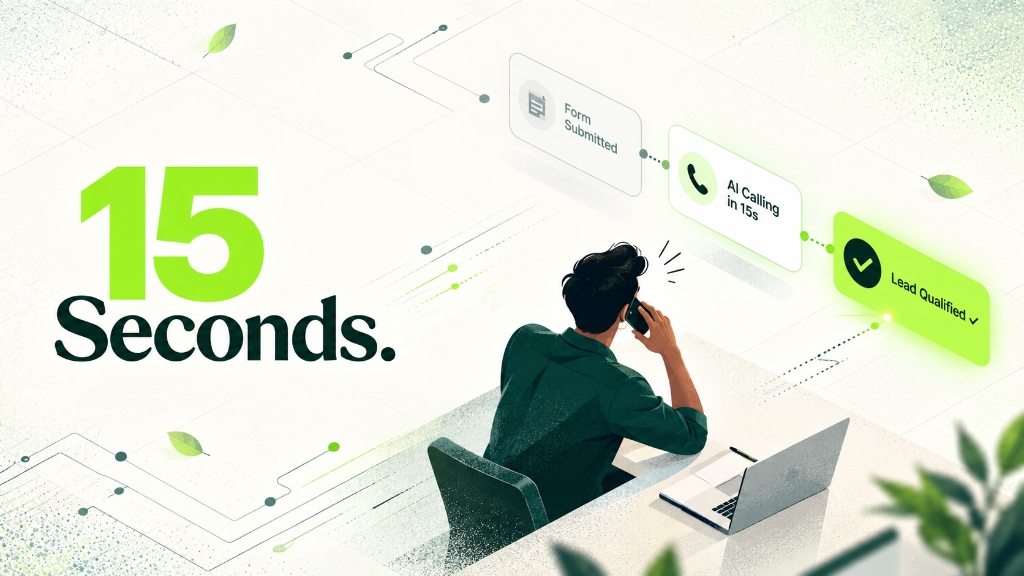
The mechanism is straightforward. When a prospect submits a form on your Meta Lead Ad, Google Ads landing page, 99acres listing, or website, a webhook fires to Binate's AI calling system. Within 15 seconds, the prospect's phone rings.
Not a WhatsApp message. Not an automated SMS. A voice call, in their preferred language, from a number associated with your business, introducing itself correctly and asking a single focused qualifying question.
The full sequence looks like this:
Trigger: Form submitted. Webhook fires instantly.
Call: AI agent dials within 15 seconds. Greets the prospect by name, references the specific form or campaign they responded to, and opens the qualifying conversation.
Qualify: One to three focused questions based on your business type. Budget, timeline, intent level. The agent listens, responds naturally, and handles follow-up questions.
Route: High-intent prospect gets a confirmed appointment or warm transfer to a live closer. Mid-intent prospect gets a follow-up call scheduled at a specific time. Low-intent or wrong-number contact gets closed in the CRM with a transcript, consuming zero human time.
This entire loop completes in under 90 seconds. It runs at 3 AM, on Diwali, during a campaign burst that generates 200 leads in two hours. The system scales to handle parallel simultaneous calls without any additional cost or headcount.
For Kerala businesses specifically, the AI agent handles Malayalam-first conversations natively, including Manglish code-switching and regional accent variations from Kozhikode, Thrissur, Malappuram, and Thiruvananthapuram. A prospect who fills out a form at 11 PM and gets a warm, clear Malayalam call within 30 seconds has a very different experience than one who receives a call the following afternoon in generic English.
Binate AI calling agents average a 15-second response time from form submission to first ring, across 24/7/365 operations, including weekends, public holidays, and overnight hours.
What the AI Actually Says in the First 60 Seconds
The first 8 seconds determine whether a prospect stays on the call or hangs up. The two biggest drop-off triggers are: a robotic pause before speaking, and an opener that sounds like a spam call.
Binate's agent is built to clear both immediately.
Here is what a typical first-call flow looks like in English and Malayalam:
AI Agent:  "നമസ്കാരം [Name] സാർ, [Brand Name]-ൽ നിന്നാണ് വിളിക്കുന്നത്.
            നിങ്ങൾ ഇപ്പോൾ ഞങ്ങളുടെ inquiry form fill ചെയ്തിരുന്നല്ലോ.
            ഒരു 1 മിനിറ്റ് സംസാരിക്കാൻ പറ്റിയ സമയമാണോ?"

Prospect:  "ഹലോ, അതെ. Details ഒന്ന് അറിയാനായിരുന്നു."

AI Agent:  "തീർച്ചയായും. [Service/Product] inquiry-യെ കുറിച്ചാണ്.
            നിങ്ങൾ ഈ മാസം തന്നെ start ചെയ്യാൻ പ്ലാൻ ചെയ്യുന്നുണ്ടോ,
            അതോ explore ചെയ്യുകയാണോ?"

Prospect:  "അടുത്ത ആഴ്ച തന്നെ വേണം."

AI Agent:  "Very good sir. ഞങ്ങളുടെ senior consultant-മായി നാളെ രാവിലെ
            10 മണിക്ക് ഒരു quick call arrange ചെയ്യട്ടേ?"
The agent does not read a script rigidly. It listens and responds to what the prospect actually says. If they switch to English, the agent seamlessly switches to English:
AI Agent:  "Hi [Name], this is [Brand Name] calling.
            You filled out our inquiry form just a moment ago.
            Is this a good time for a quick word?"

Prospect:  "Yes, go ahead."

AI Agent:  "Great. You were looking at [product/service].
            Quick question - are you looking to get started
            within the next month, or are you still
            in the research stage?"

Prospect:  "Looking to start soon, actually."

AI Agent:  "Perfect. Let me get you connected with
            our team. Can I book a 15-minute call
            for tomorrow morning at 10 AM?"
The agent does not read a script rigidly. It listens and responds to what the prospect actually says. If they ask a product question, it answers. If they say they are busy, it offers to call back at a specific time. If they want a human immediately, it initiates a warm transfer.
What it never does: pause awkwardly, mispronounce names, forget the context of the inquiry, or run out of patience.
Every hour you wait is leads your competitor already closed
Binate AI calls every form submission within 15 seconds in Malayalam, Hindi, or English — 24 hours a day, 7 days a week.
See a Live DemoThe ROI Maths for Indian Ad Campaigns
This is where the business case becomes hard to argue with.
Take a business spending ₹1,00,000 per month on Meta and Google Ads, generating 200 leads at an average cost-per-lead of ₹500.
With a human telecalling team averaging a 3-hour callback window, the conservative estimate is that 55 to 65% of those leads go cold before meaningful contact is made. That is 110 to 130 leads per month that your ad budget paid for and your follow-up system threw away. At ₹500 per lead, that is ₹55,000 to ₹65,000 in wasted acquisition spend every month.
An AI calling agent reaches all 200 leads within 15 seconds at a cost of ₹3 to ₹9 per completed call. Total cost: ₹600 to ₹1,800 per month.
| Follow-Up Model | Response Time | Leads Reached | Monthly Cost | Wasted Lead Spend |
|---|---|---|---|---|
| Human telecalling team | 2 to 4 hours average | 35 to 40% of leads | ₹25,000 - ₹35,000 per agent | ₹55,000+ |
| AI calling agent | Under 15 seconds | 100% of leads | ₹600 - ₹1,800 | Near zero |
The AI agent does not replace your sales closers. It replaces the dead air between a lead submitting a form and your sales team finding out about it.
The Industries Where Speed-to-Lead Has the Highest Impact
Speed matters everywhere. But in certain verticals, a slow follow-up system does not just cost conversions — it costs the entire campaign.
Real estate: Property leads browse multiple listings in a single session, often late evenings. The developer who calls first sets the frame for the entire decision. Detailed breakdown in our guide to real estate lead automation with AI voice agents.
Education and coaching centres: Admission season produces massive lead spikes in short windows. A parent researching schools on a Sunday evening calls back the institution that responded first on Sunday evening, not the one that called Monday morning.
Healthcare and clinics: Appointment intent is highest in the moment of concern. A patient who called about a consultation and did not hear back within 20 minutes is already checking a competing clinic.
D2C and e-commerce: COD order verification, return prevention, and cart abandonment recovery all have windows measured in minutes. A customer who does not get a confirmation call within 10 minutes of placing a COD order has a significantly higher cancellation rate.
Financial services: Loan and insurance leads are among the fastest-decaying in any vertical. A prospect who fills out a loan inquiry form has typically already filled out two others from comparison sites. First responder wins the conversation.
Setting Up Speed-to-Lead AI Calling in 48 Hours
The integration does not require an engineering team or custom development.
Step 1: Connect your lead sources Link your Meta Lead Ads form, Google Ads form extension, or website landing page to Binate via webhook or a no-code connector like Zapier or Make. Every new submission triggers the outbound call automatically.
Step 2: Set your qualification script Share your business context: what you sell, the 2 or 3 qualifying questions that matter most, how to handle common objections, and where to route each outcome. This takes about 30 minutes to prepare.
Step 3: Test on your own number Before going live, call in yourself. Hear exactly how the agent greets, qualifies, and routes. Adjust tone, questions, or language if needed.
Step 4: Go live Every lead that hits your CRM from that point triggers a call within 15 seconds. Your sales team starts each day with a pre-qualified list, confirmed appointments, and a full transcript of every overnight conversation.
Total deployment: 48 to 72 hours. For context on how this fits into the broader picture of revenue lost to slow or missed calls, see our analysis of the real cost of missed calls for Indian businesses.
Frequently Asked Questions
Speed-to-lead refers to the time between a prospect submitting an inquiry and a business making first contact. Harvard Business Review research shows that contacting a lead within 5 minutes produces nearly 100x better qualification rates than waiting 30 minutes. In India's competitive digital ad market, where consumers compare multiple options simultaneously and screen unknown callers aggressively, the effective window is often shorter than 5 minutes.
Yes. Unlike a human telecalling team limited to one call per agent at a time, an AI calling system places parallel simultaneous calls. A campaign that generates 200 leads in two hours can have all 200 contacted within minutes of each form submission, without queuing, without overtime costs, and without any degradation in call quality across the volume.
Yes, provided the agent is built correctly. Binate's AI agents open with context (referencing the specific form or campaign the prospect responded to), use natural conversational language, and respond to what the prospect actually says rather than reading from a fixed script. Call completion rates in live Indian deployments average above 90%.
Integration works via webhook or no-code connectors like Zapier and Make. When a lead submits a form on Meta Lead Ads, Google Ads, or a website landing page, the submission triggers an API call to Binate's system, which initiates the outbound call within 15 seconds. No custom engineering is required.
Yes, when structured correctly. Automated outbound calls to warm opt-in leads (prospects who submitted an inquiry form) are legal under TRAI's TCCCPR (2018) framework. Requirements include operating through a registered telemarketer header, scrubbing dial lists against the NCPR/DND registry, and maintaining DLT compliance logs. Binate's platform handles DND scrubbing and compliance logging natively.
The businesses winning on paid ads in India in 2026 are not necessarily running better creatives or targeting better audiences. Most of them are simply calling faster.
The lead your competitor closed last week probably came from the same platform you are running. The difference was not the ad. It was the 15 seconds versus the 4 hours.
Use the Missed-Call Revenue Loss Calculator to see exactly what slow follow-up is currently costing your specific business, or read our deeper guide on why 78% of customers never call back to understand the full behavioural picture behind lead decay in India.
Deploy speed-to-lead AI calling for your business in 48 hours
Binate connects to your Meta Lead Ads, Google Ads, or website forms and calls every inquiry within 15 seconds, in the language your prospect prefers.
Book Your Free Demo